In engineering, a project cannot exist only on drawings, models or screens.
No matter how precise the calculations or how detailed the plans, the true test always comes when the system is deployed in real conditions.
For technical projects involving structures, mechanical systems or cable-based infrastructure, the field often reveals constraints that cannot be fully anticipated during the design phase.
This is why engineering work does not stop once the plans are completed.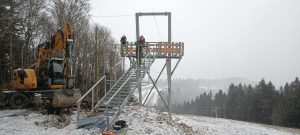
Design and engineering are essential steps in the development of any technical system. Calculations, modeling and planning allow engineers to define the structure, anticipate loads, verify safety factors and organize the different phases of a project.
However, the transition from design to installation introduces a new set of challenges.
Terrain conditions, environmental factors, access constraints or operational requirements can all influence how a system behaves once installed. These realities require continuous interaction between engineering teams and field operations.
At Ascenteck, projects are developed through a constant exchange between the design phase and on-site work.
Engineering decisions made in the office are regularly confronted with real-world conditions in the field. This process involves:
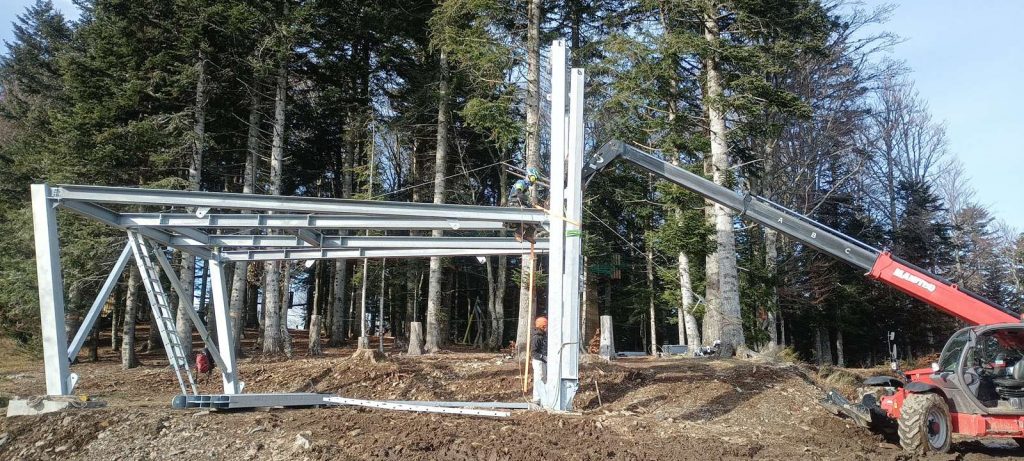
installation of structures and systems on site
technical adjustments and fine tuning
validation of design assumptions
testing under operational conditions
This back-and-forth between engineering and fieldwork allows solutions to evolve and improve during the deployment process.
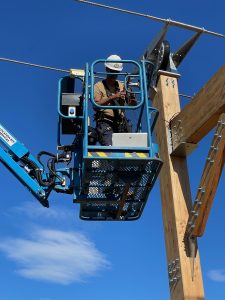
One of the key aspects of Ascenteck’s approach is the continuity between project phases.
Rather than separating design and implementation, projects are followed from the early engineering stages through to installation and validation on site. This continuity allows teams to maintain the same level of technical attention throughout the entire project lifecycle.
By remaining involved at each stage, engineers can ensure that the original design intent is preserved while adapting solutions when necessary.
Moments spent on site are often where the most valuable insights emerge.
Testing systems, observing how structures behave in real conditions and validating technical choices provide essential feedback that improves future designs.
These field experiences transform engineering concepts into operational, reliable systems capable of performing in demanding environments.
For engineering teams, the field is not simply the final stage of a project — it is an integral part of the process where ideas move from design to reality.