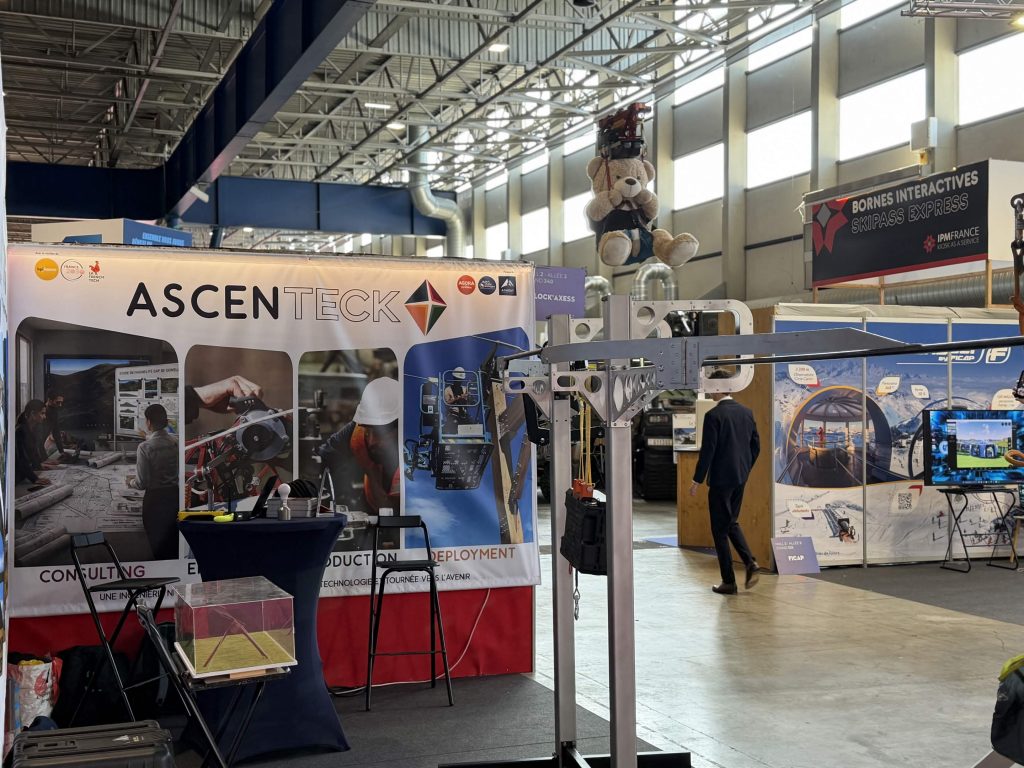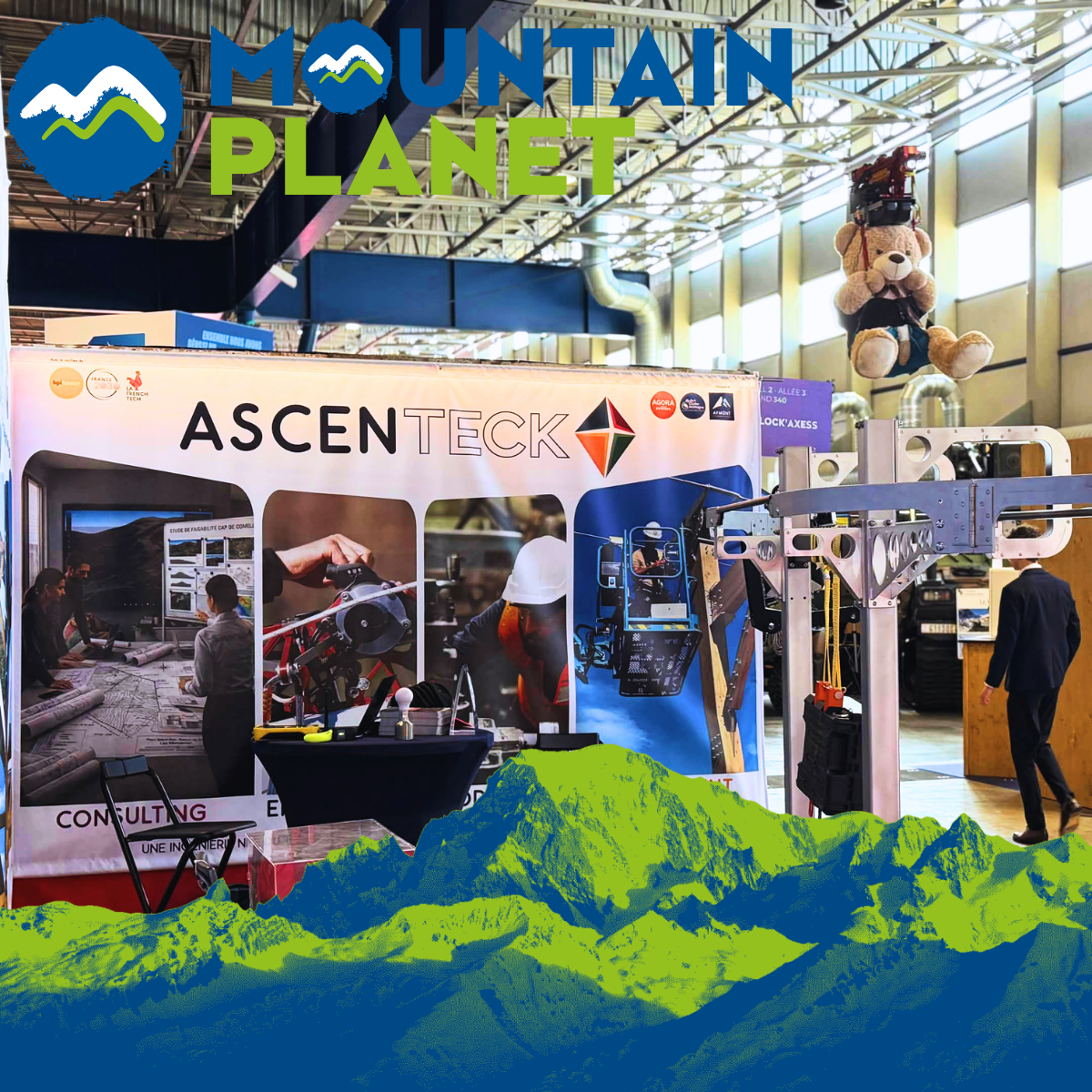
For ASCENTECK, taking part in Mountain Planet is not simply about exhibiting at a trade show. It is an opportunity to confront our expertise with the realities of the market, exchange with the stakeholders shaping mountain territories, and assess how needs are evolving around infrastructure, cable systems, maintenance, outdoor leisure and work in complex environments.
This edition confirmed one key point: the challenges we address go far beyond a single product or a single use case. Zipline automation, cable-based transport, cable inspection, maintenance, difficult-access works, four-season resorts, innovation in mountain environments… the discussions held at our booth showed the wide range of issues where ASCENTECK can bring value.
Mountain Planet brings together a very specific ecosystem: mountain resorts, operators, public authorities, engineering firms, industrial companies, specialist contractors, institutional partners, tourism project developers and stakeholders involved in complex environments.
For ASCENTECK, this diversity is valuable. It directly reflects the way we work: understanding a site, analysing its constraints, identifying real operational needs and designing an adapted solution.
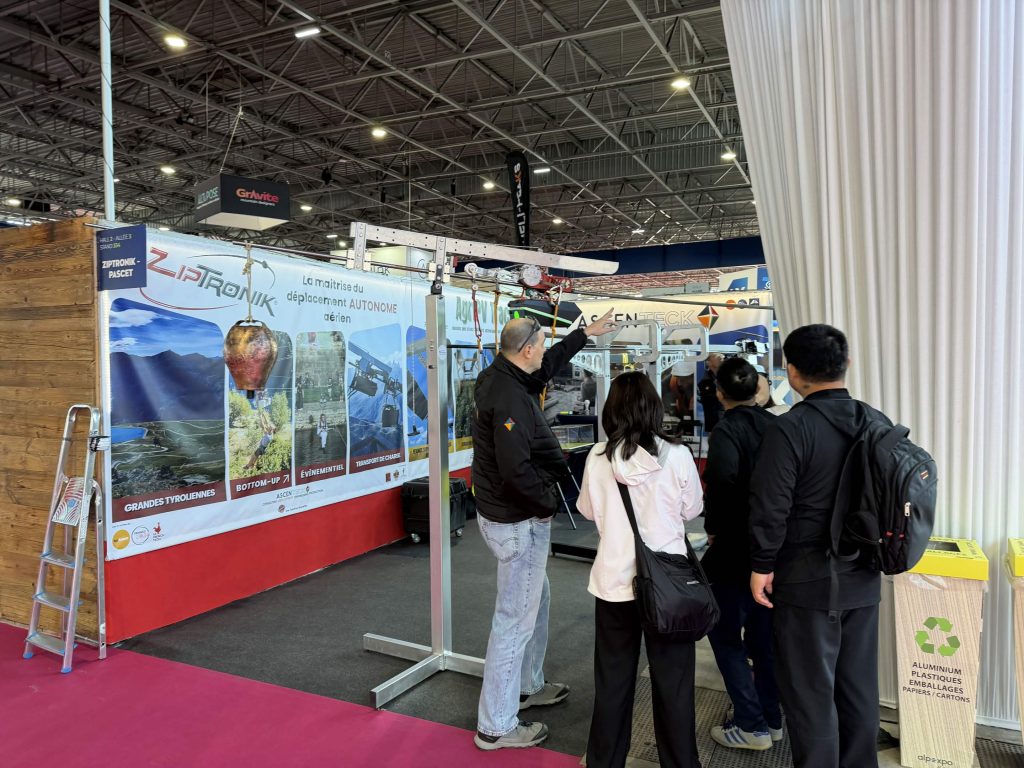
Our presence at the show allowed us to present our expertise, but above all to discuss concrete cases. Some visitors came with projects linked to outdoor leisure and ziplines. Others wanted to address more technical topics: difficult access, infrastructure maintenance, cable inspection, material transport, securing operations or adapting existing installations.
This variety of requests confirms the relevance of a global approach, connecting engineering, field experience, production and operations.
ASCENTECK’s expertise has been built over more than 20 years in demanding environments, particularly in mountain areas. This experience allows us to understand the constraints faced by operators and project owners: terrain, weather, access, safety, seasonality, maintenance, daily operations, site integration and continuity of service.
At Mountain Planet, this experience was directly confronted with today’s market needs.
The discussions showed that professionals are looking for reliable, scalable solutions adapted to their constraints. It is no longer only about creating an infrastructure or adding a new activity. It is about considering how it will be operated, maintained, secured, made profitable and adapted over time.
This is where ASCENTECK brings strong value: starting from the field, understanding real constraints and designing technically coherent solutions.
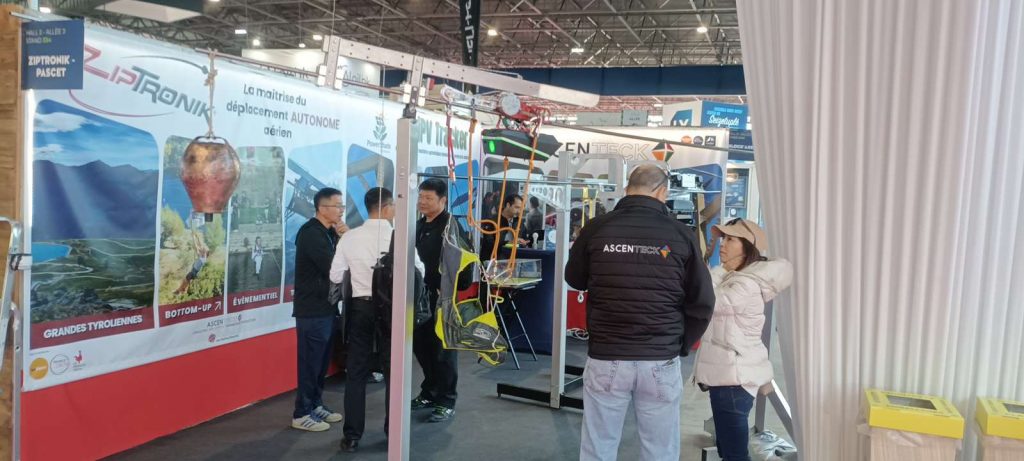
Outdoor leisure remains an important topic for ASCENTECK, especially through ziplines, cable-based activities and solutions such as ZipTronik. But this edition of Mountain Planet also highlighted other highly present needs.
We had many discussions around difficult-access works, infrastructure maintenance, cable inspection and load transport in constrained environments.
These topics are essential in mountain areas. Sites are sometimes difficult to access, operations can be complex to organise, and safety requirements are high. In this context, cable-based solutions can become genuine tools for operation, inspection or maintenance.
Whether the objective is to move equipment, access a technical area, support an inspection operation or reduce physical handling for teams, the technologies developed by ASCENTECK open up concrete possibilities.
This diversity of requests confirms that our expertise is not limited to the leisure sector. It is part of a broader range of challenges linked to movement, handling, inspection and intervention in complex environments.
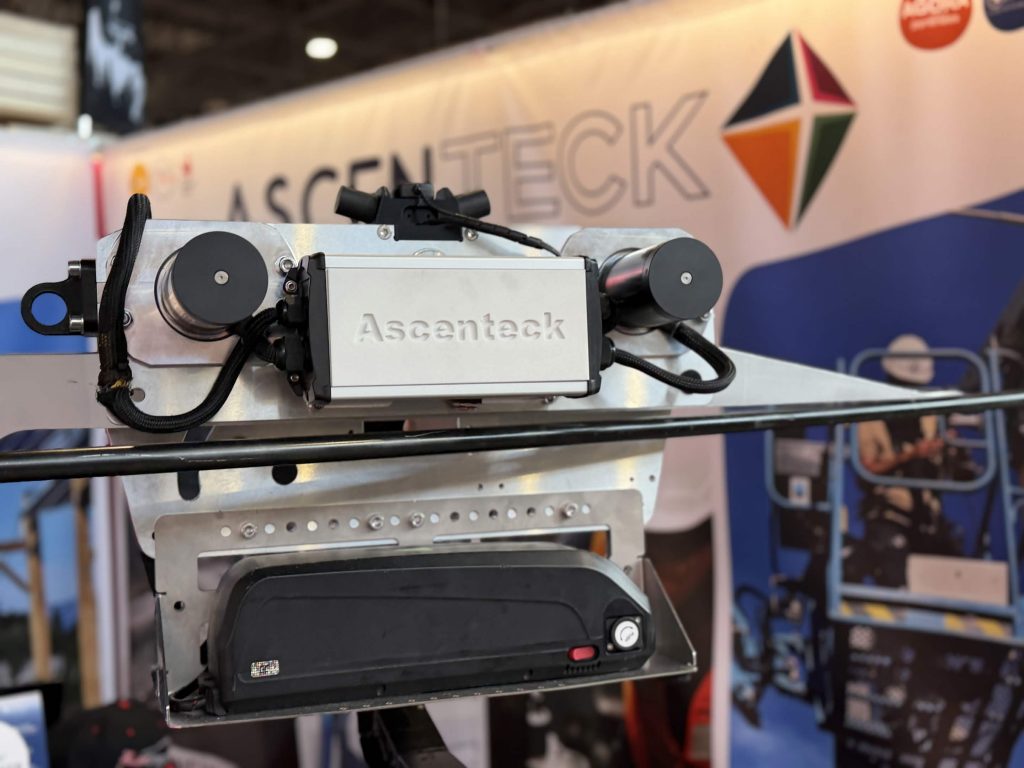
The presence of ZipTronik at the show naturally generated many discussions. Its operation, autonomy, ability to reduce handling and adaptation to line constraints attracted interest from zipline operators, but not only from them.
ZipTronik also served as an entry point to discuss other uses: load transport, automation of cable-based movement, maintenance support, technical operations and the development of specific solutions for difficult sites.
This is an important point. A product such as ZipTronik should not only be seen as an autonomous trolley for ziplines. It illustrates a broader competence: mastering automated movement on cables, in environments where safety, reliability and adaptation to terrain are decisive.
The discussions held at Mountain Planet also confirmed the evolution of the mountain market.
Resorts and territories are looking to diversify their activities, develop four-season offers, make better use of their infrastructure and adapt to new expectations. This evolution requires a different way of thinking about projects.
Innovation in mountain environments is not only about adding a new attraction or a new technology. It is about designing useful, operational, durable solutions adapted to very concrete constraints.
For ASCENTECK, this vision is central. Our projects must respond to a real use case, fit into a specific environment and deliver measurable value: simplifying operations, securing interventions, reducing handling constraints, improving technical accessibility or enabling new uses.
This is the approach we were able to share and enrich through our discussions at the show.
Mountain Planet also allowed us to measure the strength of the network built around ASCENTECK.
The presence of partners, institutional stakeholders, recognised professionals from the sector, operators and project owners confirmed our anchoring within the mountain ecosystem.
In such a specific market, the network is essential. Projects are rarely built alone. They require exchanges between different areas of expertise: engineering, operations, safety, works, maintenance, financing, planning, tourism and territorial development.
Our ability to engage with these different stakeholders is a major asset. It allows us to better understand needs, identify the right partners and build truly adapted solutions.
What we take away from this edition is the diversity of the topics discussed.
We exchanged around zipline projects, four-season resorts, cable-based transport, cable inspection, maintenance, difficult-access works, load transport and automation.
Behind this diversity, one common logic clearly emerges: mountain stakeholders are looking for solutions capable of adapting to the field.
Every site has its constraints. Every project has its uses. Every operation has its economic, human and technical realities. This is why standardised answers quickly reach their limits.
ASCENTECK is positioned precisely around this ability to adapt: analysing, designing, producing, installing and supporting solutions developed for a specific context.
This field feedback confirms several important points for our development.
First, our long-standing expertise in mountain environments remains fully relevant. Needs are evolving, but field constraints remain central.
Second, our positioning around cable-based technologies opens up opportunities across several sectors: leisure, industry, maintenance, difficult access, load transport and tourism infrastructure.
Finally, the interest shown in our solutions demonstrates that the market is looking for more integrated approaches, capable of connecting innovation, safety, operations and adaptation to the field.
Mountain Planet was therefore an important moment for ASCENTECK, not only in terms of visibility, but above all as a space for validation, listening and opening new perspectives.
We leave this edition with many discussions to follow up on, projects to qualify and collaboration opportunities to explore.
Above all, we leave with a strengthened conviction: the future of mountain infrastructure will rely on solutions capable of combining field expertise, technical innovation and a fine understanding of real-world uses.
This is exactly the direction ASCENTECK continues to pursue.
For more than 20 years, we have been developing solutions adapted to complex environments. Mountain Planet confirmed that this approach responds to very current challenges: resort diversification, four-season operations, maintenance, safety, difficult access, automation and the evolution of uses in mountain areas.